
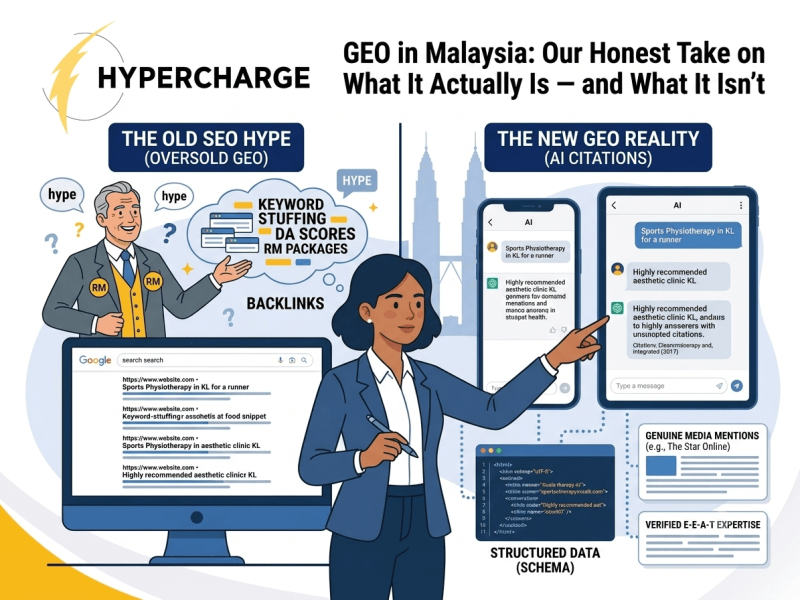
TLDR: Generative Engine Optimisation (GEO) is the practice of optimising your online presence to appear in AI-generated search responses from tools like ChatGPT, Google Gemini, and Perplexity. In practice, GEO and SEO share 90% of the same foundations. The difference is in the metrics, the measurement challenges, and a stronger emphasis on third-party brand mentions over traditional backlink building.
Every few years, digital marketing gets a new acronym that sounds revolutionary, generates a wave of agency packages, and eventually settles into being one more thing that serious practitioners were already doing anyway.
GEO — Generative Engine Optimisation — is the latest. And the honest answer is: it’s real, it matters, and most of what’s being sold under that name is just SEO repackaged for an audience that doesn’t know the difference.
We’ve been testing GEO for our clients for over a year. We’ve run prompt audits, tracked brand citations across ChatGPT, Google Gemini, and Perplexity, and compared what the AI tools recommend against what ranks in organic search. The findings are instructive — not because they reveal some hidden discipline, but because they clarify exactly what separates businesses that appear in AI-generated answers from those that don’t.
This is our take. Take it, push back on it, or build on it. But stop buying into the hype before you understand what you’re actually investing in.
Let’s Start With What GEO Is Actually Selling You
Generative Engine Optimisation is the practice of optimising your online presence to appear in AI-generated search responses — the recommendations, summaries, and cited answers that tools like ChatGPT, Google Gemini, and Perplexity produce when users ask them questions.
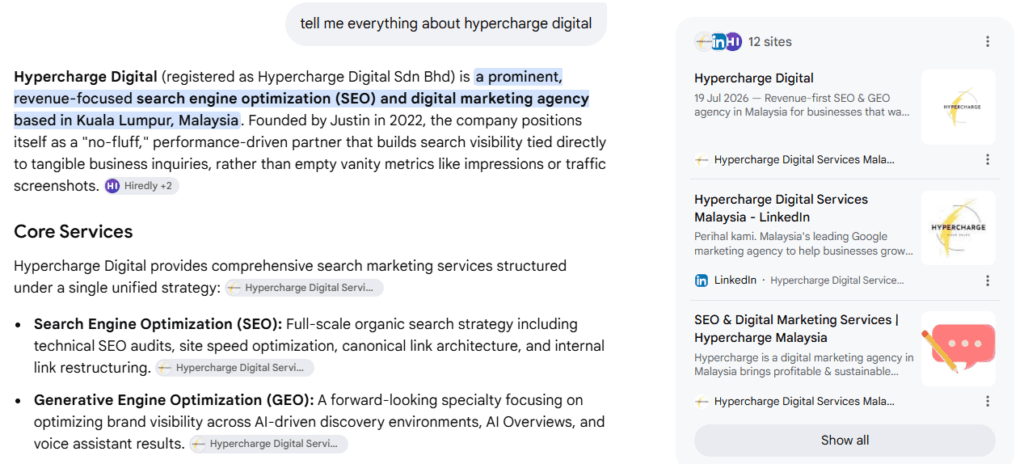
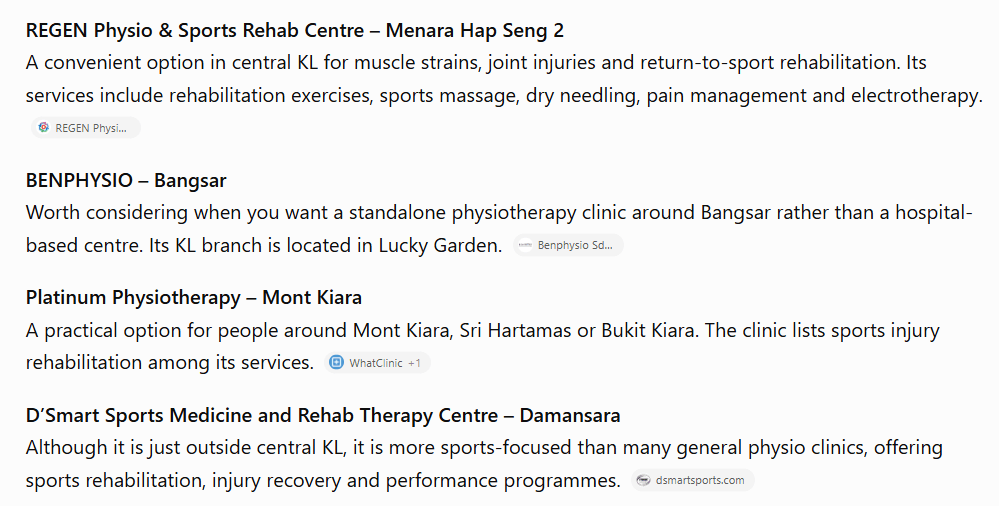
When someone types “which physiotherapy clinic in KL is good for sports injury?” into ChatGPT, and ChatGPT names three clinics — that’s GEO at work. The clinics named didn’t pay to be there. They were cited because they were the most credible, best-documented, most consistently referenced options available to the AI.
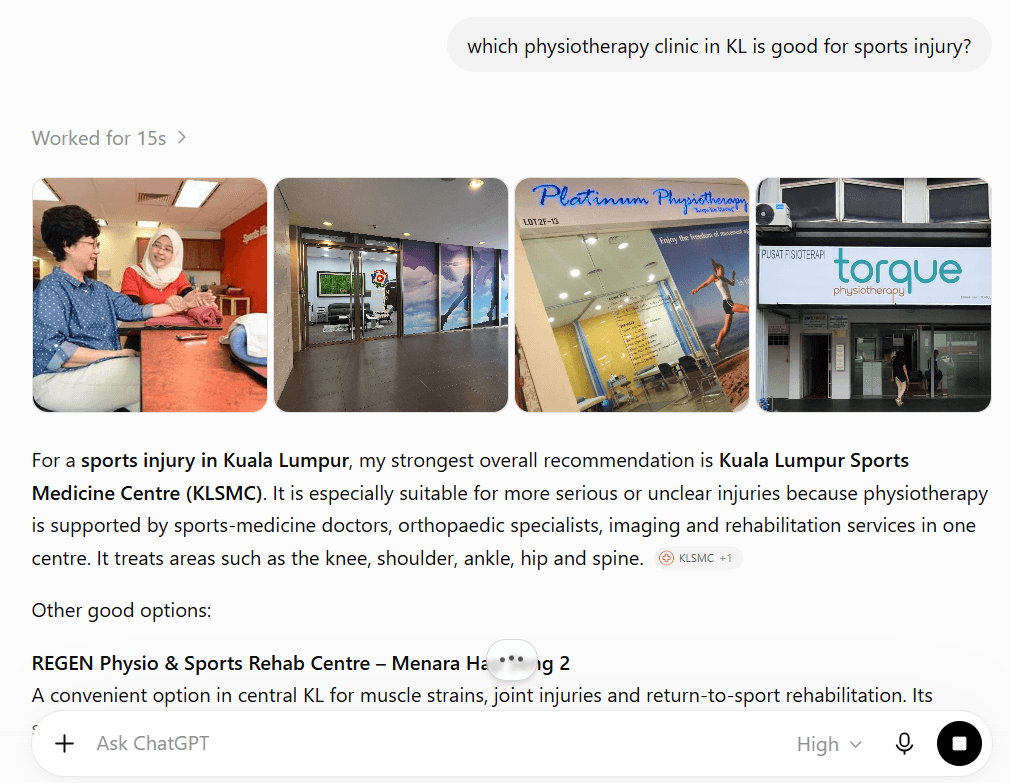
That’s the product GEO is selling: citation in AI-generated answers. It sounds new because the surface it appears on is new. The underlying mechanisms are not.
According to research from Princeton and Georgia Tech on what signals influence AI citations, the factors that most strongly predict inclusion in AI-generated answers include authoritative source citations, quotation statistics, fluency, and easy-to-understand writing. In other words: be accurate, be clear, be credible, and be cited by others. Sound familiar?
The 90% Overlap Nobody Talks About
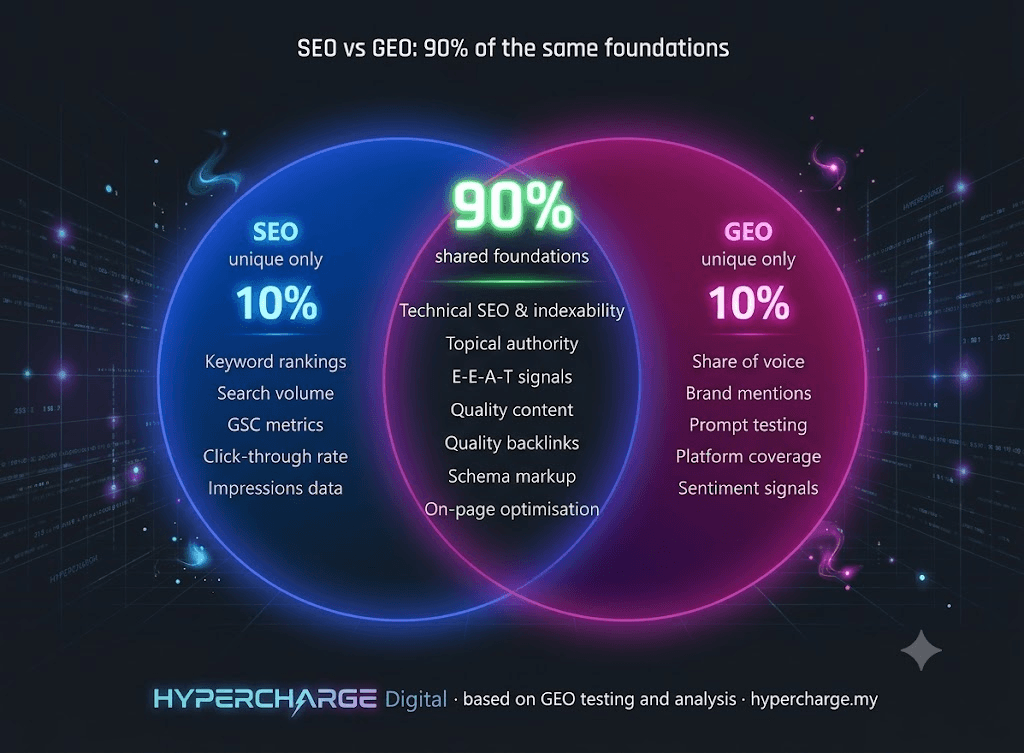
Here’s what we actually believe, based on what we’ve tested: GEO and SEO share approximately 90% of the same foundations.
Technical SEO? GEO needs it. If Google can’t properly crawl and index your website, Google’s AI can’t cite it. Same foundation, same requirement.
Topical authority? GEO needs it more urgently than SEO does. AI tools are essentially sophisticated pattern-recognition systems trained on vast amounts of web content. The businesses that appear most confidently in AI answers are those that have been consistently, accurately, and thoroughly represented across that content landscape.
Quality content? Same requirement — except the bar is higher for GEO. AI tools don’t cite mediocre content that technically ranks through backlink volume. They cite content that is genuinely useful, clearly written, and demonstrably accurate.
If your SEO is doing all of this correctly, you’re already partially optimising for GEO. If your SEO isn’t doing this — if it’s the kind of SEO that only cares about keyword placement and DA scores — then both your organic rankings and your AI visibility are weaker than they should be.
GEO doesn’t replace bad SEO. It exposes it.
Where SEO and GEO Actually Diverge
The 10% where they genuinely differ comes down to two things: the metrics, and the nature of off-page signals.
In SEO, we have a solid understanding of search behaviour because Google tells us — through Google Keyword Planner, Search Console, and years of collected data — roughly what people type into the search bar. Impressions, clicks, rankings, and leads are all trackable and attributable.
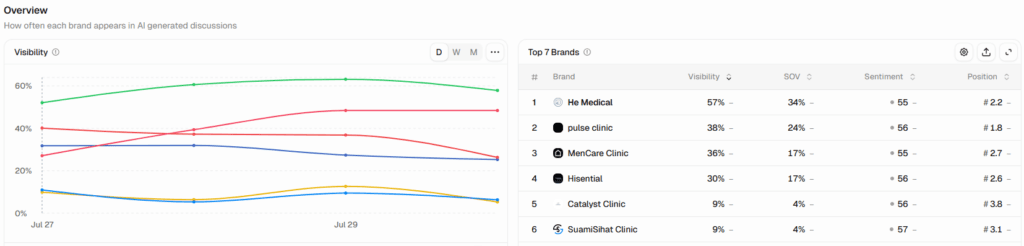
In GEO, none of this applies the same way. Large Language Models (LLMs) don’t publish what prompts people use. We can’t see keyword volumes for ChatGPT queries. We can’t track impressions in Gemini. The metrics that matter — AI visibility, share of voice, citation sentiment, platform coverage — are measured through manual prompt testing and expensive third-party tools, not a free dashboard.
This is the honest difference between the two disciplines. SEO has measurability infrastructure. GEO is currently working with best guesses and proxy signals.
The Measurement Problem Nobody Wants to Admit
Any agency selling you “GEO rankings” the way they’d sell you organic keyword rankings is misleading you.
There is no GEO equivalent of Google Search Console. There is no standardised metric that tells you how often your brand appears in AI answers across all queries, all platforms, all geographies. What exists is:
Share of voice — how often your brand is mentioned versus competitors across a defined set of test prompts. Useful, but only as good as the prompt set you’re testing.
Citation position — are you the first recommendation or the fourth? Matters, but hard to track at scale.
Platform coverage — are you appearing on Google AI Overviews but not ChatGPT? This matters because the platforms source information differently.
Sentiment — when you’re cited, is the framing positive, neutral, or negative? An AI tool that mentions your business alongside a caveat is not the same as a clean endorsement.
We track all of these for our clients. We also tell them upfront: this measurement landscape is immature. Anyone promising you precise, Google Analytics-style reporting on GEO performance is either selling you something they haven’t built yet, or showing you metrics that look precise but aren’t.
What We’ve Found Actually Works — Six Findings From Real Testing
We’re not going to pretend we have a proprietary GEO algorithm. What we have is twelve months of prompt testing, brand monitoring, and systematic comparison between businesses that appear in AI answers and those that don’t.
Here’s what we’ve found.
Finding 1 — Foundational SEO Still Carries the Most Weight
If your website can’t be properly indexed by Google, AI tools that reference Google’s index — which includes Google AI Overviews and increasingly Perplexity — won’t cite it. Full stop.
This means: correct robots.txt, no accidental noindex tags, proper XML sitemap, working internal links, clean technical health. Not glamorous. Absolutely non-negotiable.
We’ve seen businesses invest in GEO-specific content while their technical foundation was broken. The content got indexed eventually. The AI citations never materialised. The AI needs to understand your website before it can recommend your business. That understanding starts at the technical layer.
Finding 2 — Topical Authority Is No Longer Optional
This is the most significant shift from old-school SEO thinking, and it’s where GEO genuinely raises the bar.
Inserting a keyword into a page used to be enough to signal relevance. AI systems don’t work that way. They evaluate the breadth and depth of your coverage across a topic before deciding whether to treat your website as an authoritative source on that topic.
A physiotherapy clinic that has published detailed articles on sports injury rehabilitation, post-surgical recovery, back pain treatment, and dry needling — written by named physiotherapists with verifiable credentials — signals something very different to an AI than a clinic whose website has a one-paragraph service description for each treatment.
Building topical authority through content clusters isn’t a GEO innovation. It’s been the right SEO approach for years. GEO just enforces it more harshly, because AI systems are better than algorithms at evaluating whether a website actually knows what it’s talking about.
Finding 3 — Third-Party Brand Mentions Trump Backlinks
This is the biggest practical shift from traditional off-page SEO thinking, and it has real implications for how businesses should approach link building.
Traditional SEO placed enormous weight on backlinks — links from other websites pointing to yours, used as a proxy for how much the internet endorses your content. GEO changes the calculus.
AI systems were trained on web content broadly — not just crawled URLs and their link relationships, but articles, news coverage, forum discussions, social media mentions, and editorial references. A business that appears in a Malaysian news article, gets discussed on Reddit or a relevant forum, or is mentioned in an industry publication carries citation weight in AI training data that a simple backlink from an obscure directory does not.
What this means practically: media coverage, social media presence, online press releases, and editorial collaborations with trusted platforms now matter more for AI visibility than they ever did for traditional search rankings. The “get more backlinks” playbook hasn’t disappeared — but it’s no longer the primary off-page lever.
Finding 4 — Backlinks Still Matter, Just Not the Way They Used To
To be precise: backlinks still matter for SEO, and since GEO depends on a strong SEO foundation, they still matter indirectly for GEO.
What they don’t do, in the GEO context, is substitute for genuine brand presence. A website with 200 backlinks from link farms and zero brand mentions in reputable publications is less AI-visible than a website with 30 quality backlinks and consistent presence in trusted editorial content.
Do-follow or no-follow matters less in the GEO context than the authority and relevance of the source. A no-follow mention in The Star Online carries more weight for AI visibility than a do-follow link from an obscure Malaysian directory that no human ever reads.
Finding 5 — AI Only Cites Sources It Trusts
AI tools are — perhaps unsurprisingly — better than humans at detecting low-quality link profiles. The signals that Google uses to identify link spam align closely with the signals that AI systems use to decide whether a source is trustworthy enough to cite.
If your off-page strategy is built on link farms, mass-produced guest posts on content mills, or paid placements on sites that exist purely to sell links — this doesn’t just risk a Google penalty. It actively works against GEO because these sources don’t contribute to the kind of authoritative brand presence that AI systems recognise.
The difference between black hat and white hat link building has always mattered for long-term SEO. For GEO, it matters even more — because AI systems don’t just evaluate links, they evaluate the quality of the entire ecosystem of mentions surrounding your brand.
Guest posting on genuinely relevant, quality publications is still a valid strategy. The key word is genuine — publications that have real audiences, real editorial standards, and real authority in their domain.
Finding 6 — Self-Proclaimed Expertise Is Dead
This is the one finding that should make every business owner who writes their own marketing copy pay attention.
AI systems don’t take your word for it. When you say you’re “the best aesthetic clinic in KL” or “Malaysia’s leading SEO agency,” the AI doesn’t repeat that claim. It evaluates whether external, independent sources corroborate it.
Google’s E-E-A-T framework — Experience, Expertise, Authoritativeness, Trustworthiness — has always been the standard for high-quality content. AI systems apply this framework not just to content, but to brands. A clinic whose doctors have published medical articles, whose results have been covered in health publications, and whose patients have written detailed reviews is fundamentally more AI-visible than a clinic that has simply written “our doctors are experienced professionals” on their website.
The question AI asks is: does anyone else say you’re good? If the answer is no — or if the answer is only people you paid to say so — the AI will pass over your business in favour of one that has genuine third-party endorsement.
What You Should Actually Do About GEO
If you’re reading this thinking “I need to start from scratch,” you probably don’t.
If your SEO foundations are solid, you’re already partially GEO-ready. What you likely need to add is:
A comprehensive website — one that covers who you are, what you do, where you serve, when you were established, and what makes you different. AI systems treat your website as an entity profile. The more complete and consistent that profile, the more confidently an AI can recommend you.
Consistent content production — not for keyword rankings, but to demonstrate ongoing expertise. Publishing two to four substantive articles per month on topics your customers care about builds the topical depth that AI systems reward.
Active third-party presence — media coverage, industry forum participation, social media engagement, press releases on reputable distribution channels, and editorial collaborations with websites that have genuine authority. This is where most Malaysian businesses have the biggest gap.
Structured data — schema markup, particularly FAQPage and LocalBusiness schema, gives AI systems machine-readable entity data that makes your business easier to cite accurately.
For a detailed breakdown of each tactic, our guide on how to appear on AI like ChatGPT and Gemini covers the implementation specifics.
Should You DIY This or Engage an Agency?
The DIY question is worth answering honestly.
The technical foundation and content components of GEO are learnable. If your team has the capacity and the skill to execute consistent, quality content, fix technical SEO issues, and manage structured data — those components can be handled in-house.
The off-page component is harder to DIY. Building genuine relationships with editorial websites, getting coverage in Malaysian media, and managing a systematic brand mention programme requires time, relationships, and often a budget for paid editorial placements. This is where agencies add the most value — not because they have magic, but because they have the relationships and the processes already built.
The measurement component is almost impossible to DIY cost-effectively. The tools required to track share of voice across AI platforms, monitor brand citations, and run systematic prompt audits are expensive and require interpretation by someone who understands what they’re looking at.
How to Choose the Right Agency for GEO
One thing we feel strongly about: GEO is not a standalone service.
If an agency is selling you a “GEO package” that isn’t built on top of a solid SEO engagement, be sceptical. GEO without SEO foundations is a house built without a floor. The AI can’t cite a website it can’t access, can’t trust a brand it can’t verify, and can’t recommend a business that has no authoritative digital presence.
Look for:
An agency that does technical and on-page SEO first — not one that jumps straight to content and brand mentions without fixing the foundation. A website with indexing issues, thin content, and broken internal links won’t benefit from GEO activity no matter how many brand mentions you build.
Specialisation over generalism — agencies that charge low rates and produce high content volumes without technical depth are producing content that may not index correctly, may not have proper schema, and may not build topical authority in any meaningful way.
Honest measurement — any agency that promises you specific AI ranking positions is either uninformed or misleading you. The right agency will track share of voice, citation trends, and sentiment — and will tell you clearly that direct ROI attribution is not yet possible.
What Should This Cost?
Since we’re being transparent: good SEO in Malaysia from a competent, full-service agency ranges between RM3,000 and RM10,000 per month, depending on scope. That scope should include technical SEO, on-page optimisation, content production, and brand mention building.
GEO, added on top of that foundation, typically adds RM2,000 to RM3,000 per month to cover the additional content requirements, brand mention monitoring, prompt auditing, and reporting.
Offpage activity — paid editorial placements on trusted Malaysian media websites and reputable industry publications — carries additional costs. Trusted editorial placements on established Malaysian platforms typically range from RM500 to RM3,000 per placement, depending on the publication’s domain authority and audience. This isn’t an agency fee — it’s the cost of what you’re building. Real media coverage, real brand presence, real authority. Budget for it accordingly.
Is It Worth It?
Yes.
But “worth it” comes with a caveat that any honest agency should tell you upfront: GEO ROI is not directly measurable right now.
Unlike Google Ads where a click leads to a landing page and a conversion can be attributed, AI citations don’t always produce a traceable click. When a potential patient asks ChatGPT which skin clinic in KL is good for laser treatment and your clinic is named — that mention shapes their consideration set before they ever open a browser. The eventual appointment may look like a direct Google search or a WhatsApp enquiry. The AI citation that started the journey is invisible in your attribution model.
This doesn’t mean GEO doesn’t work. It means it works in the same way that brand awareness and PR have always worked — through influence that precedes and shapes the measurable action, rather than through a direct click-to-conversion path.
The businesses that will benefit most from GEO investment are those where brand perception at the research stage is most influential: healthcare, legal services, financial advice, and B2B professional services. When the decision is important, the stakes are high, and the customer researches extensively before committing — AI citations during that research phase carry enormous weight.
Invest in GEO because you want to be present at every stage of your potential customer’s decision journey, including the AI-assisted research phase. Don’t invest expecting a neat cost-per-lead report at the end of the month. The measurement infrastructure for that doesn’t exist yet.
What does exist is the opportunity to build the kind of authoritative, well-documented, widely-cited digital presence that both AI systems and discerning human customers respond to. That investment compounds — in SEO rankings, in AI visibility, and in the kind of brand reputation that makes every other marketing channel work better.
If you want to understand how this applies specifically to your business, our AI search optimisation service starts with an audit of your current AI visibility and a gap analysis against your main competitors. No promises about ChatGPT positions. Just an honest assessment of where you stand and what it would take to improve.