
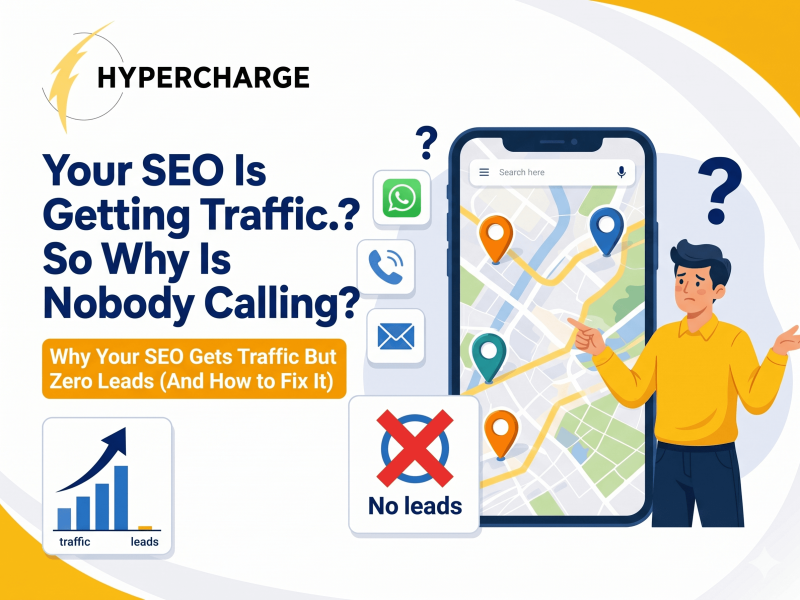
Picture this. You open your analytics dashboard and the traffic graph is pointing upward. Your SEO agency sends over a report showing thousands of monthly visitors, dozens of ranking keywords, and a chart that looks, frankly, impressive.
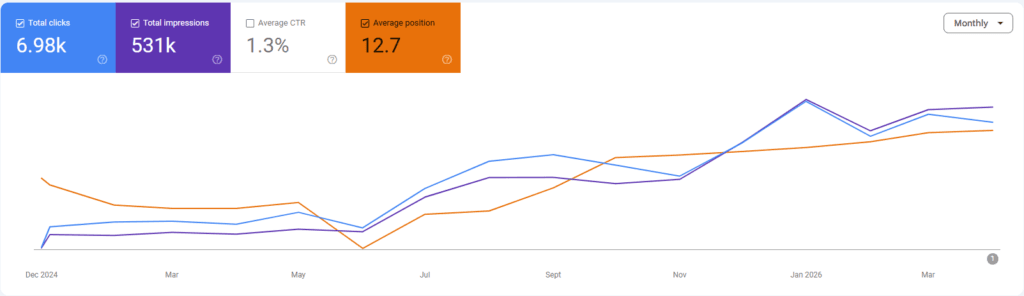
Then you look at your phone. Nothing. Your WhatsApp enquiries are the same as before. Your front desk is not busier. The leads have not materialised — and when you ask your agency about it, they tell you SEO is a long game and that brand awareness takes time.
This situation is not rare in Malaysia. It is, unfortunately, the default outcome when an SEO campaign is built around the wrong objective. This article explains why it happens, how to tell whether it is happening to you, and what a different approach — one built around leads rather than traffic — actually looks like in practice.
Traffic and Leads Are Not the Same Thing
This sounds obvious. But the way most SEO campaigns are structured, you would not know it.
Traditional SEO tends to optimise for search volume — finding keywords that a large number of people search for every month and building content around them. The problem is that high search volume does not equal high purchase intent. A keyword like “back pain when sitting” might be searched 10,000 times a month in Malaysia. But the people searching for it are mostly looking for exercises to try at home, not a chiropractor to book.
A keyword like “chiropractor Subang Jaya”, on the other hand, might only be searched a few hundred times a month. But the person typing that into Google has already decided they want a chiropractor. They are in Subang Jaya. They are looking for one right now. That search is worth ten times the traffic from the informational keyword — because it converts.
Revenue-first SEO starts from this distinction. The question is not “what are people searching for?” but “what are people searching for when they are ready to spend money?”
Traditional SEO vs Revenue-First SEO: What Actually Differs
| Traditional SEO | Revenue-First SEO | |
| Primary goal | High traffic volume | Qualified leads and enquiries |
| Keyword focus | Informational, high-volume terms | High purchase-intent, location-specific terms |
| Example keyword | back pain when sitting | chiropractor subang jaya |
| Typical KPI | Sessions, impressions, rankings | Leads, calls, WhatsApp enquiries, revenue |
| Reporting shows | Traffic graphs trending upward | Enquiries by keyword source |
| Content priority | Blog articles targeting awareness queries | Service pages and local pages first; blogs support them |
| Timeline to leads | Often 12–24 months, if at all | 3–9 months for commercial keywords |
| Risk | Good-looking reports, empty phone | Slower traffic growth initially, but meaningful from month one |
Why Traditional SEO Produces Great Reports and Empty Pipelines
The incentive problem is straightforward. An SEO agency is typically judged on the metrics it can control: keyword rankings, organic traffic, and the number of pages indexed. These are measurable, demonstrable, and look excellent on a monthly report.
Leads are harder. They depend on keyword intent, page conversion, the quality of your offer, and factors outside the agency’s direct control. So many agencies default to optimising what they can show — traffic — rather than what you actually need.
The result is a common pattern we see when businesses come to us after being with another agency for a year or two. Their site ranks for dozens of keywords. They have a blog with fifty articles. Their monthly traffic is four or five times what it was when they started. And their phone has barely moved.
The keywords are informational, not commercial
The most common culprit is keyword selection. Informational keywords — “what is physiotherapy”, “how to treat knee pain at home”, “signs you need a chiropractor” — attract people who are researching, not buying. Writing these articles is not inherently wrong. But building an SEO strategy entirely around them, before the commercial keywords are ranking, is the mistake.
The search volume looks good on paper but produces nothing in reality
We have audited websites where the primary keywords being tracked had zero or near-zero actual search volume in Malaysia. A keyword like “physiotherapy for knee pain Subang Jaya Selangor” might appear on a keyword list — but if nobody is searching for that exact phrase in any meaningful volume, ranking for it generates nothing. Monthly reports can look impressive without any of it mattering.
How to Tell Whether Your Current SEO Is Actually Working
You do not need to be an SEO expert to evaluate this. You need to ask four straightforward questions about your current campaign.
1. Are leads being tracked at all?
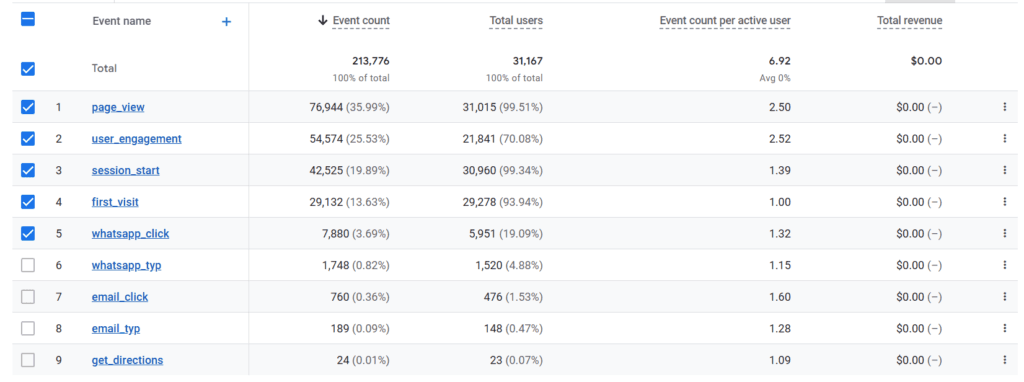
Set up GA4 — Google’s free analytics platform — to track form submissions, phone link clicks, and WhatsApp button clicks as conversion events. If your agency has never set this up, or if your monthly report contains no mention of enquiries or conversions, that is the first problem. You cannot optimise for something you are not measuring.
2. What keywords are actually being targeted?
Ask your agency to show you the keywords they are actively working to rank for. Then apply a simple test: does someone searching this keyword already want to buy, book, or contact a business? A keyword like “HIFU injection Penang” or “chiropractor for back pain KL” passes this test. A keyword like “what is HIFU treatment” does not — at least not as a primary target. Understanding the difference between informational and commercial keyword intent is the most important thing you can do as a business owner evaluating your SEO.
3. Are your money keywords moving in Google Search Console?
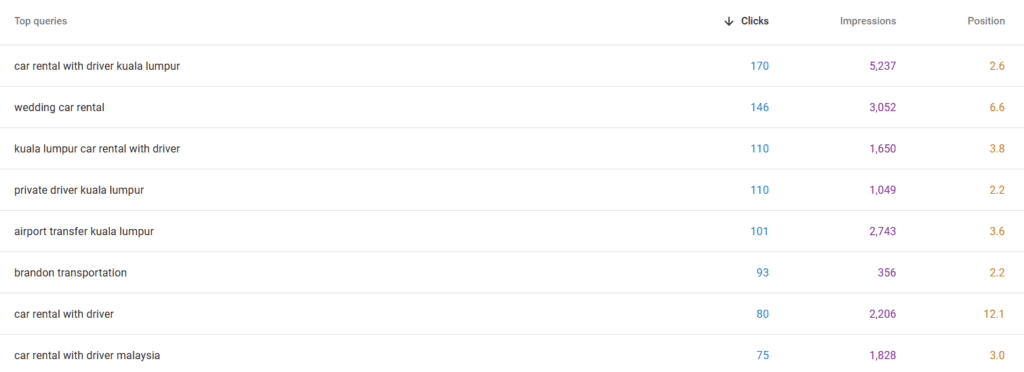
Google Search Console — also free — shows you the average position of every keyword your site appears for. Log in, go to Performance, and filter by the commercial keywords most important to your business. If those keywords are not moving, or if they are not even being tracked, your campaign is not oriented around the right goals.
4. Does your phone actually ring more than before?
This is the simplest test and the one most agencies hope you will not apply. If after six to nine months of SEO, your enquiry volume has not meaningfully increased, the strategy needs to be questioned. Not the patience — the strategy.
Red Flags to Watch for When Evaluating an SEO Agency
These are the signals that an agency’s approach is optimised for retention, not for your results.
- They describe SEO as purely an awareness tool — SEO does build awareness, but it also generates direct leads when the keyword strategy is correct. An agency that separates the two is signalling how they will measure success.
- Leads are never discussed as a KPI — if your monthly review covers rankings and traffic but never mentions enquiries, conversions, or return on investment, the campaign is not being run with your business objectives in mind.
- The keywords they focus on have no meaningful search volume in Malaysia — a keyword with 10 searches a month in Malaysia is not worth the content cost, regardless of how well you rank for it.
- They cannot answer “which keywords will generate enquiries for your specific business” — a generic answer about industry keywords is not enough. The agency should understand your service, your location, and your customer well enough to name specific terms.
- The contract makes it difficult to leave — legitimate agencies are confident enough in their results to offer reasonable exit terms. Aggressive lock-in clauses are a signal of low confidence.
What a Revenue-First SEO Strategy Actually Looks Like
The approach starts from a different question. Not “what keywords can we rank for?” but “what does a customer search for in the final moment before they decide to contact a business like yours?”
That question leads to a very different keyword list. Location-specific service terms. Treatment or service names paired with the city or suburb. Comparison queries from people who have already decided they want the service and are now choosing a provider.
These are the pages built first — the service pages, the location pages, the specific treatment pages. The informational blog content comes later, and its job is to support those commercial pages by building topical authority and funnelling readers who are not yet ready to buy toward pages where they eventually will be.
The goal at Hypercharge is for clients to see their SEO investment break even within a few months — not a few years. That is only possible when the keywords being targeted are the ones that generate enquiries, not just readership. Our revenue-first SEO service is built entirely around this model, with monthly reporting that tracks leads by keyword source — not impressions.
The Right Question to Ask Your SEO Agency This Month
Traffic is a means to an end. For most Malaysian businesses investing in SEO, the end is enquiries — calls, WhatsApp messages, form submissions, bookings. If your current campaign cannot draw a clear line between the keywords being targeted and the enquiries being generated, it is worth asking why.
The audit is free. Log into Google Search Console, filter by your most important commercial keywords, and check whether they are moving. Then check GA4 for how many of your website visits result in a contact event. Those two numbers, together, will tell you more about whether your SEO is working than any traffic graph.
If what you find raises questions, our free SEO audit will tell you exactly what is holding your rankings back — and whether the strategy needs to change.