
Picture two dental clinics side by side on the same street in Subang Jaya. Same hours, similar reviews, similar websites. One shows up consistently in the Google Maps 3-pack. The other doesn’t. The difference? One chose “Dental Clinic” as its Google Business Profile primary category. The other chose “Health and Medical Clinic.” That single decision — made in under 30 seconds — is quietly suppressing its Google Maps visibility every day.
Category selection is one of the most underestimated decisions in local SEO. And for Malaysian SMEs, where most businesses set up a Google Business Profile and never revisit it, fixing this one field can produce visible ranking improvements faster than almost anything else.
Your Google Business Profile primary category is one of the strongest local ranking signals Google uses. It defines what searches your listing is eligible to appear for. Malaysian businesses should choose the most specific category that accurately describes their core service — not a broad umbrella. Secondary categories expand reach without diluting primary relevance.
This article explains how to think about category selection, which categories commonly work for key Malaysian business types, and how to make changes safely.
Why Your GBP Category Is One of Your Most Important Local SEO Decisions
When someone types “orthodontist Kepong” into Google, the algorithm needs to quickly determine which businesses are relevant to that query. Your primary category is the first signal it checks.
If your primary category is “Dentist” rather than “Orthodontist,” Google may consider you less relevant to that orthodontist query — even if orthodontics is your main service. You’d still appear for “dentist Kepong” searches, but for the more specific query, another clinic with a better-matched category could edge you out.
This is what the Google Maps ranking factors research consistently shows: relevance is one of the three core ranking signals, and category is one of the clearest relevance signals available.
The implications for Malaysian businesses are significant. A vague or mismatched primary category is essentially telling Google: “I’m not sure what I do.” That uncertainty gets reflected in your rankings.
Primary Category vs Secondary Categories — What’s the Difference?
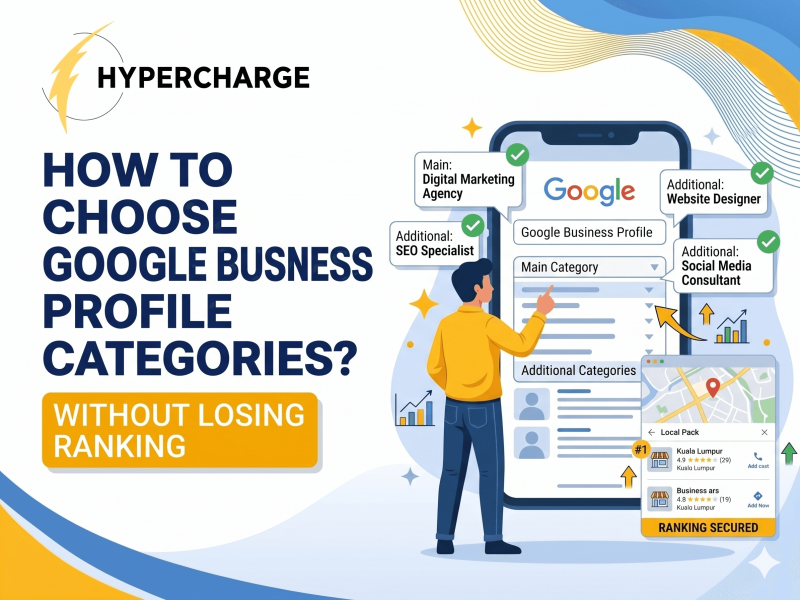
Your primary category is the single most important field. It defines your business to Google at a foundational level. Google uses this to determine which search queries your listing is relevant for, and it’s displayed publicly on your Maps listing.
Secondary categories are additional descriptors that broaden the range of searches you can appear for. They don’t carry as much weight as the primary, but they matter — especially for businesses that offer multiple distinct services.
A physiotherapy centre might set:
- Primary: Physiotherapist
- Secondary: Sports Medicine Clinic, Rehabilitation Center, Pain Management Physician
This way, the business is strongly positioned for “physiotherapy” searches while also appearing for the more specific “sports injury rehab” or “back pain clinic” queries.
How Many Secondary Categories Can You Add?
Google currently supports up to 9 additional (secondary) categories per listing. Most Malaysian businesses add zero or one. In practice, 3 to 5 well-chosen secondary categories is the sweet spot — enough to broaden reach, without diluting the primary signal.
How to Find the Right Primary Category for Your Business
The starting point is Google’s full list of supported business categories. This list is extensive — Google maintains over 4,000 categories globally, with new ones added periodically. The challenge isn’t finding a category; it’s finding the most accurate and specific one.
The Specific vs Broad Category Trade-Off
The instinct for many business owners is to choose a broad category, thinking it increases their visibility. The logic seems sound — “if I say I’m a Medical Clinic, I’ll show up for more searches than if I say I’m a Dermatologist.” In practice, the opposite is often true.
Specificity signals relevance. When your primary category precisely matches the search intent, Google is more confident in showing you. A broader category means you’re competing with a wider pool of businesses for generalised searches, while losing the relevance edge on the specific searches that actually convert.
Common Category Mistakes Malaysian Businesses Make
Using a parent category when a child category exists — Choosing “Restaurant” when you should be “Nasi Kandar Restaurant” or “Seafood Restaurant.” The more specific option exists and performs better.
Choosing categories based on what sounds impressive — A small accounting firm choosing “Financial Institution” instead of “Accounting Firm” because it sounds bigger. Google’s algorithm doesn’t care about prestige.
Not revisiting categories after a business pivot — A clinic that added aesthetic services two years ago but still has “General Practitioner” as its only category is missing out on visibility for an entire revenue stream.
Selecting competitor categories — Some businesses choose a category based on what their top-ranked competitor uses, without checking if it accurately describes their own services. Misrepresenting your business category violates Google’s guidelines and can lead to suspension.
Category Recommendations by Industry (Malaysia)
Healthcare and Clinics
| Business Type | Recommended Primary Category |
| General GP clinic | Medical Clinic |
| Dental practice | Dental Clinic |
| Orthodontics focus | Orthodontist |
| Aesthetic / skin | Skin Care Clinic or Medical Spa |
| Physiotherapy | Physiotherapist |
| Chiropractic | Chiropractor |
For healthcare businesses, understanding the local SEO landscape for clinics in Malaysia is particularly useful, given the YMYL (Your Money or Your Life) sensitivity of this sector and the trust signals Google requires.
Legal Firms
| Business Type | Recommended Primary Category |
| General practice | Law Firm |
| Criminal law focus | Criminal Justice Attorney |
| Conveyancing | Conveyancer |
| Corporate law | Corporate Lawyer |
| Family law | Family Law Attorney |
Home Services
| Business Type | Recommended Primary Category |
| Air conditioning | Air Conditioning Contractor |
| Plumbing | Plumber |
| Pest control | Pest Control Service |
| Electrical | Electrician |
| Interior design | Interior Designer |
Beauty and Wellness
| Business Type | Recommended Primary Category |
| Hair salon | Hair Salon |
| Nail salon | Nail Salon |
| Massage | Massage Therapist |
| Slimming centre | Weight Loss Service |
| Medi-spa | Medical Spa |
How to Change Your GBP Category Without Losing Rankings
Many business owners hesitate to change their category because they fear losing whatever rankings they currently have. The concern is valid — a category change is a relevance signal change, and Google may re-evaluate your listing. Here’s how to do it carefully.
Check your current rankings first. Before making any changes, note which queries you currently rank for in Google Maps. Use Google Search Console or simply search manually for your key terms and record your position.
Change only the primary category if needed. Avoid changing primary and secondary categories at the same time. Make one change, wait three to four weeks, and observe the impact before adjusting further.
Don’t chase competitors blindly. If your direct competitor recently changed their category and jumped in rankings, it’s tempting to copy them. But if that category doesn’t accurately represent your business, it’s a violation of Google’s guidelines on how businesses should represent themselves — and the short-term gain usually reverses.
Expect a 4–8 week settling period. Any category change needs time for Google to re-crawl and re-evaluate your listing. Rankings may fluctuate briefly before stabilising.
Once you’ve got your categories right, the next priority is ensuring your Google Business Profile is actively managed and regularly updated — because category alone won’t sustain your position without the supporting signals.
Frequently Asked Questions
No. Google’s guidelines require that your category accurately represents your business. Using a misleading category to capture additional searches is a policy violation and can result in listing suspension. If your exact business type isn’t listed, choose the closest accurate option.
Category changes affect your Maps listing and local pack ranking, not your organic website ranking directly. However, if your website content aligns with the new category, both can improve over time.
Google adds new categories periodically, usually quarterly. If you last checked your category options more than a year ago, it’s worth reviewing — a more specific or accurate option may now exist for your business type.