
Three years ago, a dental clinic in Petaling Jaya was generating 40 new patient enquiries per month from RM3,000 in monthly Google Ads spend. Today, the same clinic — same keywords, same targeting, same service area — is spending RM5,500 to generate the same 40 enquiries. Nothing about the clinic has changed. The market has.
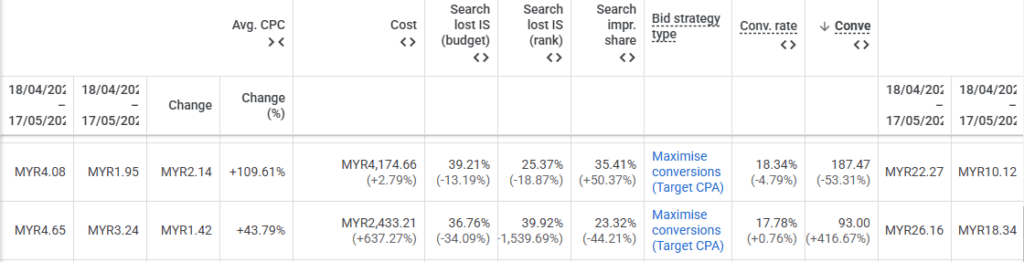
This is not an isolated case. Across healthcare, legal services, home improvement, and beauty in Malaysia, business owners are having the same uncomfortable conversation: ads are costing more, producing less, and the gap between spend and return is widening every quarter.
Understanding why this is happening — and what to do about it — is one of the most important strategic decisions a Malaysian SME owner can make in 2026.
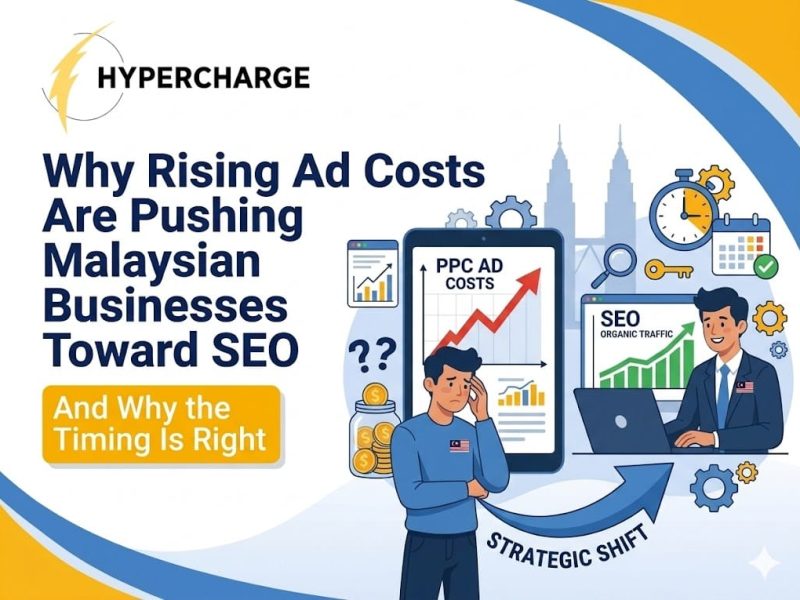
Google Ads and Meta Ads costs in Malaysia have risen steadily year on year as more businesses compete for the same advertising inventory. Businesses built entirely on paid channels are watching their cost per lead increase and their margins compress. The businesses investing in SEO now are building organic traffic that compounds in value — and costs nothing per click once established.
📌 Key Takeaways
- Google Ads CPCs and Meta Ads CPMs in Malaysia have risen significantly over the past three years — and the structural reasons behind this mean costs will continue increasing
- More Malaysian businesses advertising online means more competition for the same ad inventory — basic auction economics drive prices up
- Businesses dependent entirely on paid ads face a compressing margin problem that worsens every year
- SEO builds traffic you don’t pay per click for — and unlike ads, its value compounds rather than resets when you stop paying
- This is not an argument to stop running ads — it’s an argument to start building the organic asset that reduces your dependency on them
- The best time to have started SEO was two years ago; the second-best time is now — because the compounding only starts when you begin
What’s Actually Happening to Ad Costs in Malaysia
The cost of digital advertising is not rising because platforms are being greedy. It’s rising because of supply and demand. Ad inventory — the number of available placements on Google and Meta — is roughly fixed. The number of businesses competing to fill those placements grows every year. When supply stays flat and demand increases, price goes up. This is basic auction economics applied to digital advertising.
Meta Ads (Facebook and Instagram)
Meta’s advertising model is built around a real-time auction. Every time a Malaysian user scrolls their Facebook or Instagram feed, Meta runs an instant auction to decide which ad to show. The businesses willing to pay the most — adjusted for estimated engagement — win the placement.
In 2021, a beauty salon in Shah Alam might have been one of 15 businesses bidding for the attention of a 28-year-old woman in her area. By 2026, she might be wanted by 50 businesses — salons, skincare brands, aesthetic clinics, slimming centres, wellness apps — all bidding for the same eyeball. The cost of winning that placement has risen accordingly.
CPM (cost per 1,000 impressions) — the base unit of Meta advertising cost — has increased meaningfully across Malaysian markets over the past three years. The rise is not uniform across industries or demographics, but the directional trend is consistent: it costs more to reach the same person than it did before.
Google Search Ads

Google’s cost-per-click model operates on a similar auction principle. When a Malaysian types “dental implants Bangsar” into Google, an instant auction determines which ads appear and in what order. Advertisers bid on keywords, and the winning cost is determined by what competitors are willing to pay.
According to how Google’s auction system determines ad costs, the actual CPC you pay is influenced by your bid, your Quality Score, and what competitors bid. As more dental clinics in Bangsar start running Google Ads — which is exactly what has happened across most competitive Malaysian categories — the auction becomes more contested and the cost per click rises.
The categories that have seen the sharpest increases in Malaysia are predictably the most competitive: healthcare, legal, aesthetic services, and home renovation. These are also the categories where Hypercharge’s clients operate — which means this trend is not theoretical. It’s showing up in actual campaign data every month.
Why Ad Costs Keep Going Up — And Why They Won’t Stop
The structural drivers behind rising ad costs in Malaysia are not cyclical. They’re directional. Understanding them is important because it tells you this is not a temporary market condition that will reverse itself.
More Advertisers Competing for the Same Inventory
Malaysian SME digital adoption is accelerating. Government digitalisation programs, the post-pandemic shift to online channels, and increasing digital literacy among business owners means the pool of active advertisers grows every year.
According to global digital advertising cost trend data, digital ad spending has grown consistently across Southeast Asian markets as more businesses shift budgets from offline to online. Each new advertiser entering the auction pushes prices up for everyone already there.
There is no mechanism that reverses this. The only scenario where ad costs decrease is a recession severe enough to drive businesses out of advertising entirely — which comes with its own set of problems.
Platform Algorithm Changes
Both Meta and Google periodically change how their ad algorithms work — how they prioritise which ads to show, how they calculate relevance, what audience signals they can and can’t use. Each major change creates a period of performance volatility where previously efficient campaigns become less predictable.
iOS privacy changes in 2021 significantly reduced Meta’s ability to track user behaviour across apps — making its audience targeting less precise and its ad delivery less efficient. Less efficient delivery means more spend is needed to achieve the same outcome. Malaysian advertisers absorbed that cost, and many are still absorbing it.
Rising Consumer Ad Fatigue

Malaysian social media users are seeing more ads than at any point in history. The average Malaysian on Facebook or Instagram is exposed to dozens of ad placements per session — which means each individual ad competes harder for limited attention. Click-through rates on Meta placements have declined across most industries over the past three years.
Lower CTR means lower engagement scores. Lower engagement scores mean the platform’s algorithm deprioritises your ad in future auctions — which means you bid higher to maintain placement. The cycle compounds.
What This Means for Malaysian SMEs Running Paid Ads Right Now
The practical effect of rising ad costs is felt in two ways that matter directly to a business’s financial health.
The Margin Compression Problem
Consider a home renovation contractor in Subang Jaya. In 2022, they spent RM4,000 per month on Google Ads and generated 20 qualified leads, signing 5 projects at an average value of RM8,000 — producing RM40,000 in revenue. Their cost per lead was RM200, cost per acquisition RM800, and ad spend represented 10% of revenue.
By 2026, to generate the same 20 leads for the same keywords in the same area, they need to spend RM6,500. The revenue is still RM40,000. But ad spend is now 16.25% of revenue. Profit margin has compressed — not because of anything the business did wrong, but because the market became more competitive.
This compression compounds annually. Without an organic traffic strategy to offset rising paid costs, a business’s marketing efficiency will deteriorate automatically — even if the campaigns are run perfectly.
The ROAS Tipping Point
ROAS — Return on Ad Spend — is the revenue generated per ringgit spent on advertising. A business with a ROAS of 8x generates RM8 for every RM1 spent on ads. As costs rise without corresponding revenue increases, ROAS declines.
Every business has a ROAS floor — the point at which running ads produces less value than it costs. As ad costs rise, that floor gets closer. Businesses with no organic traffic alternative have no cushion when they hit it.
The SEO Alternative — Renting Traffic vs Owning It
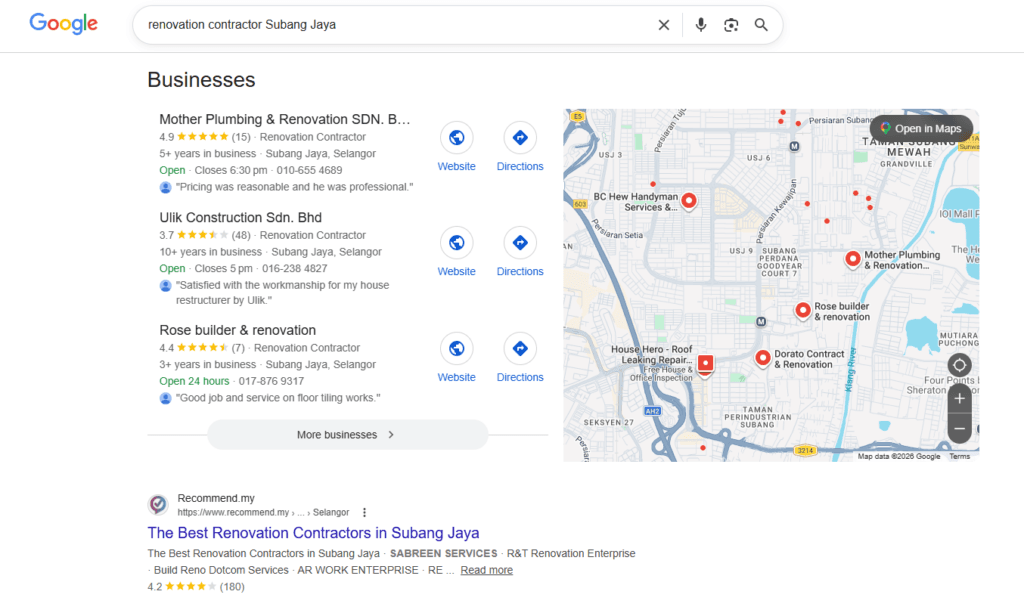
The most useful way to understand the difference between paid ads and SEO is the renting vs owning analogy — applied specifically to traffic.
When you run Google Ads, you rent positions in search results. You appear while you pay. The moment you stop paying, you disappear. The RM6,500 spent this month buys this month’s traffic. It buys nothing next month.
When you invest in SEO, you build a position in search results. A page that ranks organically for “renovation contractor Subang Jaya” continues to appear next month, next year, and the year after — without paying per click for each visitor. The investment made this year generates traffic this year, next year, and the year after.
The Compounding Math That Changes Everything
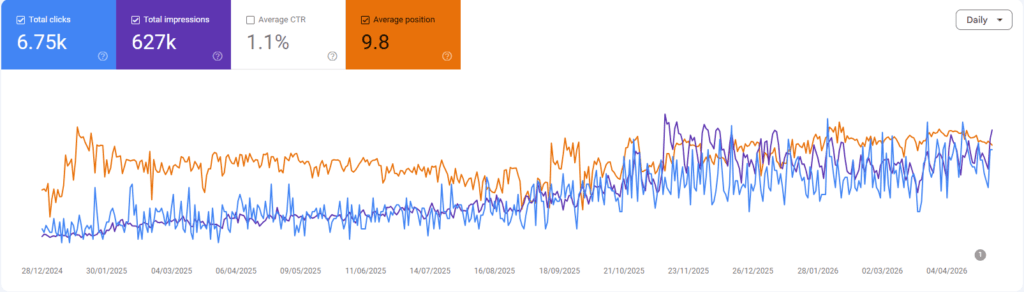
This is where the economics of SEO become genuinely compelling for any Malaysian SME thinking in a 24-month horizon.
Assume a business invests RM3,000 per month in SEO for 12 months — a total of RM36,000. In months 1–3, very little organic traffic is produced (this is the foundation-building phase). In months 4–6, early rankings begin appearing. By months 7–12, meaningful organic traffic and leads are arriving.
In month 13, the business continues to receive the organic traffic built over the previous year — even if SEO investment is reduced or paused. The RM36,000 invested in year one continues generating returns in year two and beyond.
Compare this to RM3,000 per month in Google Ads. Month 12’s spend generates month 12’s traffic. Month 13 generates nothing unless month 13 is also funded. The spend is continuous and non-cumulative.
Understanding how topical authority compounds your organic traffic growth makes the math even more pronounced — each new piece of content builds on the authority of what came before, accelerating rather than merely adding to the results.
What Organic Traffic Actually Costs Over Time
The cost of organic traffic — expressed as a cost per click equivalent — starts high and falls over time. In month 3 of an SEO campaign, you’ve invested significantly for minimal traffic. The implied cost per click is very high. By month 18, the same monthly investment is producing substantial organic traffic. The implied cost per click has fallen dramatically.
Paid traffic works in reverse. Your cost per click in month 1 is roughly the same as in month 18 — except it’s probably risen slightly due to increasing competition. You never get cheaper. SEO gets cheaper every month as the investment pays off at scale.Understanding how long SEO takes to show results in Malaysia is essential context here — the compounding doesn’t happen instantly. But the businesses that accepted this timeline two years ago are now sitting on organic traffic assets that their ad-only competitors are paying RM15–RM30 per click to replicate.
This Is Not an Argument Against Ads
Clarity matters here: rising ad costs do not mean ads no longer work. They mean the cost of making them work has gone up — which changes the economics, not the mechanics.
Google Ads still captures high-intent Malaysian search queries at the exact moment purchase decisions are made. Meta Ads still reach specific demographics with scale and precision. For Phase B Malaysian businesses that need leads now, paid advertising remains the right tool.
The argument is not to stop running ads. The argument is to stop running ads as your only strategy — because an ads-only business is a business whose marketing costs increase automatically every year, with no owned asset to show for it.
The sustainable answer, explored in detail in the piece on how to decide between Google Ads and SEO for your business right now, is sequenced investment: ads in Phase B when you need leads quickly, SEO in Phase C when you’re ready to build the asset that reduces your long-term dependence on paying for every click.
And as covered in the practical guide on how to reduce your Google Ads spend by building organic traffic, the transition doesn’t have to be abrupt. You run both simultaneously while shifting budget progressively from paid to organic as SEO results compound.
Why Now Is the Right Time to Start Building SEO
The most common response to the case for SEO is: “I’ll start when things slow down” or “I’ll think about it next year.” The problem with this logic is that SEO’s value is entirely dependent on when you start.
A business that starts SEO today will have 12 months of compounding authority by this time next year. A business that waits another year will be 12 months behind — while continuing to pay rising ad costs with nothing to offset them.
Google’s guidance on building a long-term helpful online presence underlines the same principle: the businesses that invest consistently in quality content and genuine search value build durable advantages that arrive slowly but hold for years.
The businesses in Malaysia that will look back at 2026 as a turning point are not the ones who spent more on ads. They’re the ones who decided — while ad costs were rising and margins were compressing — to start building something they own.
The best time to start was two years ago. The second-best time is now — because every month of delay is another month of ad spend producing nothing that compounds, and another month that a competitor with a 12-month SEO headstart extends their lead.
If you’re ready to understand what that looks like for your specific business and industry, our SEO services start with an audit that shows you exactly what organic opportunity exists — and what it would take to capture it.