
Here is a scenario that plays out repeatedly among Malaysian SMEs who have been running Google Ads for more than a year. The campaigns are working — leads are coming in, cost per lead is acceptable. But every time the ad budget is reviewed, there’s a quiet unease. What happens if the budget gets cut? What happens if CPC climbs another 15% next year? What happens if a competitor outbids you for the keywords that currently keep your phone ringing?
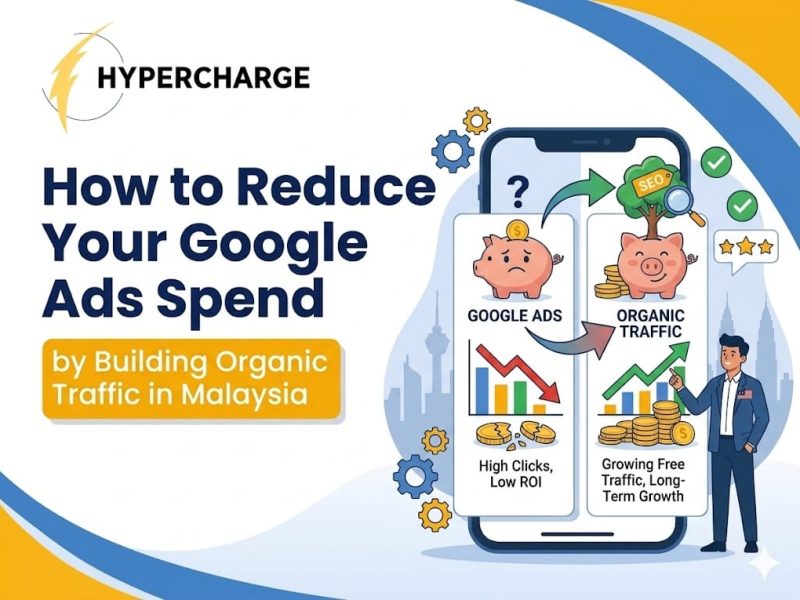
The businesses that answer those questions well are the ones building organic traffic alongside their paid campaigns — not instead of them. They’re using the data their Google Ads account generates to inform an SEO strategy that, over 12 to 18 months, begins to rank organically for the same terms they were paying for. And as those organic rankings mature, their ad dependency — and their monthly ad bill — decreases without revenue decreasing alongside it.
This is not a theoretical strategy. It is a sequenced, measurable transition that works specifically well for Malaysian SMEs, because search intent in Malaysia is high, local competition on organic results is often beatable, and the compounding returns of SEO grow precisely as the cost of paid traffic increases.
The most sustainable digital marketing strategy for Malaysian SMEs is not choosing between Google Ads and SEO — it is running both while systematically shifting more leads to organic over time. As your SEO matures and organic rankings deliver consistent traffic, the keywords you were paying for become the keywords you rank for free. Ad spend reduces without revenue reducing alongside it.
📌 Key Takeaways
- The goal is not to stop Google Ads — it is to reduce your dependency on them as organic traffic grows to replace the same demand
- Your Google Ads account already contains the data you need to build your SEO strategy: the keywords that convert, at what cost, and with what volume
- The transition from paid-to-organic follows four phases: mine, build, monitor, reallocate
- SEO in Malaysia takes 6–12 months to deliver consistent organic traffic — which means starting now is the only way to reduce your ad bill in 12 months
- The keywords to target with SEO first are the ones you currently pay the most per click for — these deliver the fastest return on organic investment
- The one mistake that derails the transition: pausing ads before organic rankings are stable
Why This Is a Transition, Not a Trade-Off
The framing that SEO and Google Ads are competing choices is one of the most persistent misconceptions in Malaysian digital marketing. They serve different functions in the same customer journey, and they work better together than either does alone.
Google Ads delivers traffic now. You bid, you pay, you appear. When the billing stops, the traffic stops. It is rented visibility — effective, immediate, and fully controllable, but entirely dependent on continued spend.
According to how Google’s organic search ranking works, organic rankings are earned through relevance, authority, and technical quality — signals that accumulate over time. Once earned, they produce traffic without per-click cost. That traffic doesn’t disappear the moment you stop paying because there is no payment attached to it.
Running both together during a transition period gives you the best of each. Ads maintain your lead flow while SEO builds. As organic rankings emerge for specific keywords, you reduce ad spend on those exact terms — reallocating budget to keywords SEO hasn’t reached yet. Over 12 to 18 months, a well-executed transition meaningfully lowers your total cost of customer acquisition without creating the revenue gap that comes from stopping ads abruptly.
The Real Cost of Ads-Only Dependence for Malaysian SMEs
Before getting into the mechanics of the transition, it’s worth quantifying what ads-only dependence actually costs — because most Malaysian business owners only see part of the picture.
The Visible Cost You See on the Invoice
Google Ads cost per click in Malaysia has increased consistently year on year across most competitive service categories. In healthcare, legal, and home services — the categories where Hypercharge’s clients typically operate — CPCs have risen significantly as more local businesses enter the paid search market.
WordStream’s research on Google Ads cost benchmarks confirms this as a global trend, and the Malaysian market reflects it: more advertisers competing for the same high-intent local keywords means higher auction prices and higher cost per lead over time.
A clinic spending RM3,000 per month on Google Ads in 2022 may be spending RM4,500 for equivalent lead volume in 2025. The campaign didn’t get worse — the market got more competitive.
The Hidden Cost Nobody Calculates
The more consequential cost is the one that never appears on an invoice. Research on organic vs paid search behaviour consistently shows that organic results receive the majority of clicks for most search queries — particularly for informational and research-intent searches that precede a purchase decision.
Every month your business doesn’t rank organically for a target keyword is a month where a potential customer who searched that term and clicked an organic result went to a competitor — without you spending a cent, because you had no organic presence to compete with. That traffic was available. You simply weren’t there to capture it.
This is the compounding hidden cost: not just what you’re paying for ads, but what you’re foregoing in free organic traffic for the same queries. The longer you delay building organic visibility, the larger the gap between what you’re paying and what you could be receiving.
The context of why rising ad costs are pushing Malaysian businesses toward SEO makes this calculation increasingly urgent with each passing year.
How the Paid-to-Organic Transition Actually Works
The transition has four distinct phases, each building on the previous one. The total timeline is 12 to 18 months for most Malaysian SMEs in moderately competitive categories.
Phase 1 — Mine Your Google Ads Data for SEO Gold
Your Google Ads account contains something most businesses don’t use for SEO: empirical data on which search queries actually convert into leads and customers in your specific market.
Log in to Google Ads and navigate to Search Terms report. This shows you the exact phrases people typed before clicking your ad and converting. Not the keywords you bid on — the actual search queries your paying customers used.
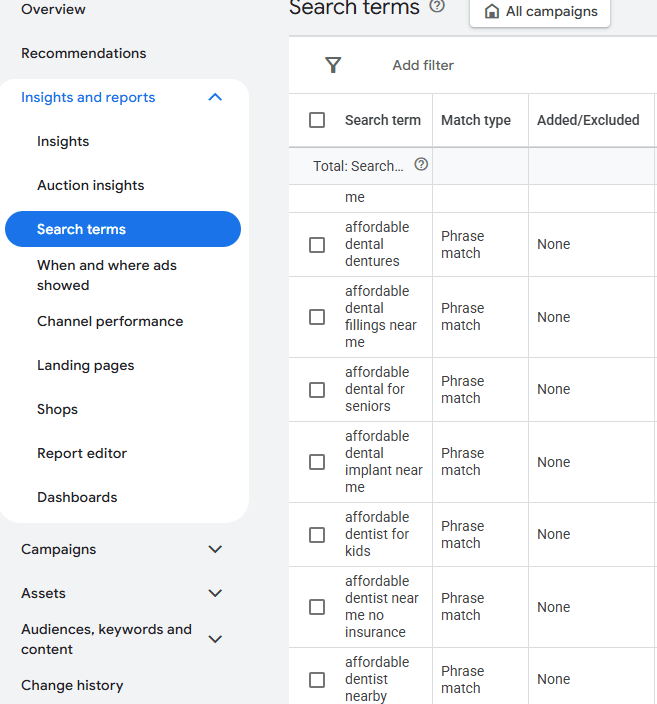
This data is more valuable than any keyword research tool can provide for your specific business, because it reflects real conversion behaviour in your real market. A keyword research tool tells you that “dental implants KL” has 500 monthly searches. Your Search Terms report tells you that “dental implants cost KL affordable” is the specific phrasing that produces your cheapest leads.
Extract the top 20 to 30 converting search queries from your ads account. Sort by conversion rate and cost per conversion. These are the keywords your SEO strategy should prioritise first — you already know they work; the question is whether you can rank for them organically.
Then conduct structured keyword research for the Malaysian market around those core terms to identify the full cluster of related queries — the informational questions, the comparison searches, the local variants — that surround your highest-converting paid terms. These form your organic content plan.
Phase 2 — Build Content Around Your Highest-Converting Keywords
Once you have your keyword targets, the work is creating content that earns those organic rankings. This means dedicated service pages optimised for your primary conversion keywords, and supporting blog content targeting the informational queries that feed into them.
A dental clinic whose Google Ads data shows “dental implants affordable Kuala Lumpur” as its top-converting query builds:
- A service page targeting that primary term and its close variants
- Supporting articles: “How much do dental implants cost in Malaysia?”, “What is the dental implant process?”, “Dental implants vs dentures: which is right for you?”
This cluster approach is why topical authority compounds your organic growth faster than single-page optimisation. When Google sees your site covering a topic comprehensively — with a primary service page supported by multiple related pieces — it evaluates your site as an authoritative resource on that topic. The cluster ranks collectively better than any single page would in isolation.
Phase 3 — Monitor Organic Coverage and Adjust Ad Spend
At around months four to six, check Google Search Console for your target keywords. Are any starting to appear in organic results — even at position 8 to 15? This is the signal that your content is being indexed and evaluated. It’s also the point where you start making conservative adjustments.
For keywords now appearing organically in positions 8 to 15 — close to page one but not quite there — maintain full ad spend. You need both to capture traffic while organic climbs.
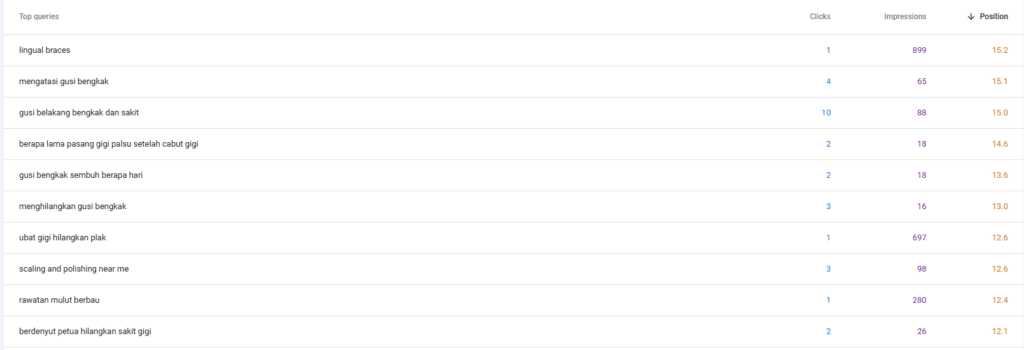
For keywords that have reached positions 1 to 5 organically — start reducing ad spend on those specific terms. If a keyword now generates leads organically, every ad click for that keyword is spend you don’t need. Reduce bids or pause those ad groups. Reallocate the freed budget to terms SEO hasn’t reached yet.
This is the key mechanism: it’s not about reducing your total campaign budget — it’s about selectively reducing spend on terms organic is covering while maintaining spend on terms it hasn’t reached.
Phase 4 — Reallocate Budget as Organic Matures
By months 12 to 18, a well-executed SEO strategy should be delivering consistent organic traffic for a meaningful portion of your target keyword set. At this stage, the reallocation becomes more significant.
Some businesses reach a point where 40 to 60% of their leads arrive through organic search — terms that previously required ad spend to capture. The ad budget that freed up doesn’t disappear from marketing — it reallocates to remaining paid terms, to expanding geographic reach, or to content production that continues building organic coverage.
The end state is not zero ad spend. It is a portfolio where organic and paid complement each other: organic covering the high-volume, high-converting core terms; paid covering new markets, new services, or high-competition terms where organic hasn’t yet established position.
The Timeline: When Does SEO Actually Reduce Your Ad Bill?
This is the question every Malaysian business owner asks first, and it deserves an honest answer rather than an optimistic one.
SEO in Malaysia typically takes 3 to 6 months for early ranking signals and 6 to 12 months for consistent organic traffic. For a business transitioning from ads to organic, meaningful ad spend reduction realistically begins at months 8 to 12 — assuming SEO work started in month one and was executed consistently.
This is the uncomfortable truth of the transition: the time you have to keep paying for ads is the same time SEO needs to mature. Businesses that start SEO today reduce their ad bills in 2026. Businesses that wait until 2026 to start reduce their ad bills in 2027 or 2028.
The cost of delay is compounding — not just because ad CPCs keep rising, but because each month of organic rankings you don’t have is a month of free traffic that went to a competitor who started earlier.
Which Keywords to Target With SEO First
Not all keywords deserve equal SEO investment in a transition strategy. Prioritise in this order:
Highest cost per click in your ads account. If you’re paying RM25 per click for “orthodontist Petaling Jaya” and that keyword converts well, ranking organically for it eliminates your highest per-click cost first. The ROI of organic ranking is highest where paid traffic is most expensive.
Highest converting search queries. From your Search Terms report, the phrases that produce the best leads at the lowest cost per conversion are your best candidates for organic investment — you’ve already validated their conversion potential through paid data.
Informational queries that precede your converting terms. Someone who searches “how much does invisalign cost in Malaysia” before searching “invisalign clinic KL” is in the research phase. Ranking organically for the informational query introduces your clinic to the customer before they enter the high-competition purchase-intent search. This reduces your effective cost of acquisition by capturing customers earlier in the journey.
Local variants of your main keywords. If you rank organically for “renovation contractor” but are paying for “renovation contractor Cheras” and “renovation contractor Kepong” — building neighbourhood-specific pages creates organic coverage for the local variants that are often easier to rank for and convert at higher rates because they signal more specific intent.
What This Looks Like for a Real Malaysian Business
Consider an aesthetic clinic in Bangsar that had been running Google Ads for two years at RM4,000 per month. Their Search Terms data showed three consistently high-converting queries: “V-shape face treatment Bangsar,” “HIFU facial KL price,” and “non-surgical facelift Malaysia.”
In month one, they commissioned a technical SEO audit, optimised their service pages for those three primary terms, and began a content cluster covering questions like “what is HIFU treatment,” “how long does HIFU last,” and “HIFU vs thermage Malaysia.”
By month six, the content cluster was indexed and two articles were ranking on page two for informational queries. The service pages had moved from position 28 to position 12 for primary terms.
By month ten, “V-shape face treatment Bangsar” was ranking at position 4 organically. The clinic reduced its Google Ads bid for that specific term by 60% — redirecting RM800 of monthly ad spend to a new content push targeting aesthetic clinic queries in Damansara, a secondary market they hadn’t targeted before.
By month 16, two of the three primary keywords were delivering consistent organic leads. Monthly Google Ads spend had reduced from RM4,000 to RM2,400 — with the same or greater total lead volume, because organic was now contributing what paid previously covered exclusively.
This is the transition executed correctly: not a dramatic switch but a systematic, data-driven reallocation that keeps revenue stable while permanently reducing cost.
The One Mistake That Derails the Transition
The most common way Malaysian businesses damage this strategy is pausing Google Ads before organic rankings are stable.
It usually happens around month six or seven. Organic results are appearing — position 8, position 12 — and the business decides to pause ads to “see what organic does on its own.” Rankings at positions 8 to 12 are not delivering meaningful traffic. The ad pause cuts the lead flow. Revenue drops. The business restarts ads in a panic — often having also disrupted the Google Ads account’s learning phase, which means the campaigns take weeks to re-optimise.
The rule is simple: never reduce paid spend on a keyword until organic is consistently in the top 5 for that keyword. Top 5 organic positions receive the majority of clicks. Position 8 to 12 receives a fraction. Pausing ads at position 10 organic is not a transition — it is a gap in coverage with no traffic on either side.
Reduce ads gradually, keyword by keyword, as organic proves stable. Not all at once, not prematurely, and not before you have Search Console data confirming that organic is delivering actual clicks — not just impressions.
If you are currently running Google Ads and want to build the organic side of this equation with Hypercharge’s SEO services, the starting point is a keyword audit that maps your highest-converting ad terms to an organic content plan — so the transition is sequenced rather than guessed.